Showing posts with label damon mclaughlin. Show all posts

Sunday, February 23, 2014

8:00

So this little nugget comes from a ways back. It's a simple 3-chord tune, really, with a little flavor added. The title "8:00" was given to it by a friend of mine--the drummer in my group at the time--Andrew Wilshusen. I was never very good at deciding on titles, and Andrew named most if not all of the songs for the band.

Other than that, I have little to say about it. The first line is a quote from William Faulkner. I'm not sure anyone knows for certain what he meant. I'm not certain what I meant. Unlike some of my originals, I don't think I've ever disliked this one. Others...

"8:00"

I drink for the pain. I've got bad blood in my vein and in my heart.
I smoke what I can. I've got yellow hands and a space between.

I need a little wound. Everybody needs food to stay alive.
I need a paper hole brought up from my soul, so I can write.

But Mary doesn't want to know it's true.
Every song I write belongs to someone new.
Fallin'...fallin' through.

She says I lie. I can go away and die.
Then her eyes look down. She begins to turn around and apologize.
I just play this song. It don't take too damn long, not to sing.

chorus

Wednesday, October 10, 2012

"A Certain Slant of Light"

In case you missed it, my latest publication came out last week at Cheek Teeth, a site for flash fiction, literary thoughts, and artisan culture at large. As a poet it was cool to be solicited for fiction (thanks again, Katey Schultz). I couldn't help dropping poetry a line, however (thanks to you to, Emily Dickinson).

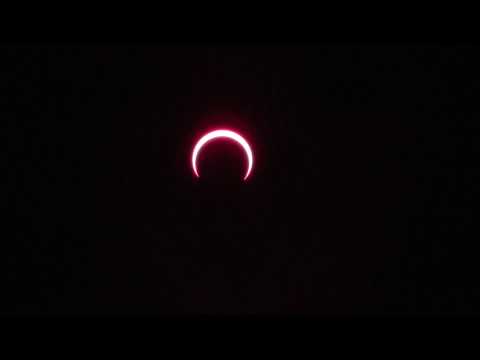
"A Certain Slant of Light" was inspired by this past summer's lunar eclipse, which I believe occurred in July. The fam and I were out on the sidewalk, diligently watching the swallowing occur on the inner wall of our box projector.

Here's the opening. Please find the rest at Cheekteeth. Drop a comment while your at it. Share.

Layla, with the warm sun at her back, focused on the small white circle inside her cardboard box projector. A perfect, dark bite had been taken from its upper-right corner. If the moon had progressed further through the eclipse in this last second, last minute, hour, such progress remained unremarkable.

“Lemmee see, lemmee see,” Maia chanted, tugging at the underside of the box. “Mom, lemmee see.”

Layla shifted the box over the head of her daughter. She tipped it until, on the distant end, an incomplete sun wavered on the white paper they had taped there.


Continue to read "A Certain Slant of Light" here.

Saturday, May 19, 2012

"Poetry, U.S.A." - My latest Feature at Cheek Teeth

Damon McLaughlin
Please drop by Cheek Teeth, the mouthpiece of Trachodon magazine, for my latest blog feature, "Poetry U.S.A":

Someone actually had the nerve to say to me once “Poetry comes from a place: if you want to write poetry, go there.” This “Poet” was well-written, respected, and (more significantly) responsible for my grade, so I drove halfway across the States and back looking for “Poetry,” searching for it in the deep canyons of Utah, sacrificing my Celica for it with a deer in the Sierras, reading the deer hair stuck in my Celica’s grill for signs of a new direction. I drank forties of Mickey’s malt liquor on Mission Beach, hoping for a vision. Considering the advice of the “Poet” was metaphorical, I searched inward via Buddhist mysticism, solitude, veganism—each method as fruitless as the last. But all the while I was searching, I was writing and reading poems like my life depended on it, just as it depends on sex and breathing.

...continue reading "Poetry U.S.A" at Cheek Teeth.

Tuesday, March 13, 2012

Mnemosyne Slumber Party Reading is up...


On February 23 I had the pleasure of reading at the Mnemosyne Slumber Party at the Mechanics Institute Library in San Francisco via Skype -- a cool experience with a great crowd. And the event is up now on Youtube. Mnemosyne is a relatively new mag focused on "Art, science and literature about dreams, memory and mind." Since I've been prosing it along lately, it was good to be back in the poetry saddle again. Thanks again, Andy.

So, my reading of "This City in Which I Drown" in SF from the comforts of my living room. All went well except for when the lights were dimmed. For a second I thought the connection dropped -- could no longer see the crowd. Alas!

Friday, November 11, 2011

Two Poems for Veterans Day

For my friends Tom and John, vets of the Vietnam War and Korean War respectively.


Homecoming


-originally published in Red River Review


I walk in the closed cavity


of myself, glancing up


the alley behind Jigs’, the one tavern,


the True Value store, the feed lot,


the grunts amid the heaps,


the flies.


Nothing’s changed.  Maggots


flies flies maggots, angels


descend upon the living and the dead.


What I’ve found here, what calls me here


is a winged, terrible thing, its red mouth


sucking me in secret. With a lift of my foot


I am gone, deep in the war


as if in prayer.


Those Nights In L.A.


-originally published in Triplopia


Nothing but laughter those nights


after we closed the studio


and some of us took the Ten to Ocean Avenue


for a stroll along the beach. Others


drove home to wives, families, the six o’clock news


setting the war down in their living rooms


like a guest who would overstay his visit.


But in the Blue Room, we’d laugh and laugh,


nothing could hurt us. Shots


ran through us like water on hottest days,


and our big mouths roared over small jokes


at the other poor bastards in the world, the fucked up


moments of their lives a cacophony of booze,


Angels’ games, Hendrix, white noise


we romped around on like teenaged children


who’d eaten their virgin to her core, juice


spilling over our lips, and the world crumbling into an emptiness


that grew as silence grows, quietly, tenderly,


to take our breath away. Those nights


I heard boys in other rooms of our house.


I saw their bodies straighten like reeds along a river


then flatten beside us in the paddy.


An awful wind passed.


I was there when Gale Sweet drug his rag across the empty stools


and unplugged the box, but still


the sound of a thunder, ten thousand whispering


and the walls alive, and the television


flashing through the dark like light through the limbs of trees


though I wouldn’t move, wouldn’t make a sound. When sweat dropped


to my thigh with a soft puussssh, I leaned closer. Behind the door,


irregularly, my wife breathed. I closed my eyes.


One inch, then another, breath for breath, I slid away


as though gliding under water, the moon above me, the stars.


In the halogen glow of my garage, jug in hand, I heard her


nice and steady,


then poured life through me like a river.

Saturday, September 17, 2011

Damon McLaughlin @ Best American Poetry--Thank You, Brenda Hillman

I was listening to a lecture at the Poetry Foundation the other day when I jotted down this little Brenda Hillman tidbit: “For the lover of poetry, there is a disequilibrium between himself and the world that nothing satisfies but poetry.” For one of my posts here, I was going to write about the manic state, itself an imbalance, into which poetry can thrust me, the effects of such a state, and to discuss that state in terms of writer’s process. Then I heard Hillman and was like—that’s it, that’s what I was hoping to say. My wife, who is not a lover of poetry, agrees with Hillman’s declaration—at least for the strange case of her husband. At her gentlest, she says I’m in my head; at her most honest, she says I’m not living in reality. But I doubt that’s the case, right?

Read more @ the Best American Poetry blog, where I am the guest blogger this week. Look forward to posts about the "self," oysters, the mind-body connection, and Emily Dickinson -- that's the plan anyway. On any given morning, who knows what will happen?

Friday, September 9, 2011

Rain Song #1, circa 1999, the JimRobbie Trio

Tonight's rain and forecasted weekend rain and hail has me suddenly hearing the "Rain Song," first recorded by The JimRobbie Trio in the winter of '99 -- like, forever, ago.JimRobbie album: JimRobbie, 1999 Jake, Andrew, and I recorded the album in this guy's home studio on an 8 track recorder that served it's purposes well at the time. I can still remember the setup, where Andrew's kit was positioned, the green curtain that separated Seth, our producer of sorts, from the rest of the band. More than anything I recall how cold it was, like hurt-your-teeth cold, then stepping out into it anyway for a cigarette between sessions.

Listening to the song now I think how Andrew is to splash cymbal what Will Ferrell is to cowbell. And I wish I could get rid of that little buzz on my guitar. Jake, as always, sounds great. And did I mention it was through Jake that we conned George Dalton--a radio journalist from our local NPR affiliate--to open the song with a little intro? Can't beat it, just can't beat it.


As for other comments about the recording and the band, we were working sort of from a minimalist viewpoint, which meant as little extra as possible: no over-effecting, definitely no over-producing. I'm still sort of into that, musically speaking.

So, please, enjoy "Rain Song #1." Feel free to hear a me-and-my-acoustic version--complete with its mistakes--on my Music page.


Saturday, July 23, 2011

Invitation...

Toad Hall
2330 Benton Road N. Haverhill NH 03774
Tel 603.787.9823
toadhallmedia.com


The editors and publisher of Toad Hall Press hope you will please join us Sunday July 31, 2011, 2–4 PM, to celebrate the publication of Damon McLaughlin’s chapbook, Olduvai Theory, winner of the 2011 Toad Hall Chapbook Contest. The party will be at Toad Hall, at the address shown above.

The author is flying in from Tucson for the launch of the book, and poets and writers from across the US will also attend.

Toad Hall is proud to serve wine from the Vineyard at Seven Birches, our neighbor, and the creations of chef Dina Dubey of No Thyme to Cook. We promise great poetry, food, and wine.

Please let me know if you can come! E-mail mariac@indexing.com or telephone 603 787-9823.

Advance praise for Olduvai Theory:


From the dawn of history to the end of time, Damon McLaughlin’s ecstatic jeremiads and coruscating haiku-like lyrics trace the trajectory of civilization across cosmic Big Bang, Pangean pea soup, eons-long bebop to the extravagant hopes and daily despair of our own American good-night. “I don’t know if this is/our first sun dance or our last,” the poet warns, “but the drums are coming./They’re coming, and a new mutilation will begin.” These are urgent poems for our darkly emergent times. 

-L. S. Asekoff


In the face of predictions that earthly catastrophe is on its way, Olduvai Theory serves up poems that tear through the language like strife, as though freeing propriety from bondage: “I don’t know if this is // our first sun dance or our last, but the drums are coming. / They’re coming, and a new mutilation will begin.” They can also sidle up to you with the delicacy of the ephemeral: “Lights of the city / float / one thousand paper lanterns.” Often raucous and outrageous in tone – at times surreal and ecstatic, if not dark with foreboding, Damon McLaughlin’s poems possess an assured and commanding voice.

-Merrill Leffler


Damon McLaughlin's chapbook Olduvai Theory predicts "this great something's end" then asks "Why give it a name?" Like Matthew Arnold, McLaughlin knows that love is the only answer in the face of the unanswerable, "Come here my darling, my moonbeam, my honeybunch. / These are questions to which you are the only answer..." This powerful collection explores the beginnings and endings we face every day and culminates with the epic "A Day in the Life of America." You won't be disappointed.

-Shaindel Beers


Maria van Beuren
Editor-in-Chief, Toad Hall Press


Sunday, May 22, 2011

Turning a Poem onto its Head

Yesterday's writing episode began with me flipping through my notebook for the odds and ends of poems I'd jotted down recently but hadn't worked with yet.  I had a couple of starter-pieces in there, and my hope was to find something worth continuing on a fresh page, thus allowing me to X it out of the old, already sweated-over pages of my notebook.

What I ran across was the start of a poem that centered on the star jasmine growing in front of my house.  For whatever reason, I'd wanted to write about that thing for weeks -- probably since it had fully burst into bloom -- and seeing my first go-at-it there on the page reminded me that I had yet to properly work up the idea.  The problem was my opening lines stunk:
With its white cluster of tiny trumpet
bells, this jasmine lingers on the sleeve
I brushed against it, unknowingly
at first. . .

Now I liked (and have kept, at least for now) the image of the trumpet bells, the words linger and sleeve, but I disliked that ignorant word unknowingly and that flat, opening preposition With. I didn't care for the line breaks either.  Creating no desirable effect of their own, they put the pace of the lines in too much conflict with the natural rhythm of the language. And none of the words received pause or attention because the rhythm was gangly instead of musical -- all of which I blamed on the line breaks, right or wrong.

The ensuing lines and few stanzas suffered the consequences of that sad opening and aren't worth discussing further. I liked a few of the sentiments that had turned up, however, a few of the jumps the poem made as it strove for new images and content. So, I made the decision to salvage what I could.  The question was, how?

And the answer was to turn the poem onto its head, effectively starting where that initial string of ideas (it hasn't been accurate, really, to call them a poem) had ended -- the last line.  Actually, the last line was "and they bloom, the silent speak." So, I restarted with the penultimate line, which I broke: "Drought pushes these loveliest of flowers / to the edge" and so on, working my way backward through the piece by every two lines or so, keeping what worked, dumping what didn't.  Old connections were cut; a new logic formed. Even better -- whatever original emotional attachments I had to the jasmine and, thus, to the poem became severed by this new arrangement, allowing me to explore emotions and ideas that wouldn't have otherwise arrived in the poem's original form.

Sure, restarting a poem with the end is a bit arbitrary, but its effect -- the poem opens itself in a new way -- is not.  Often that's the trick: to see the usual as unusual, the familiar as strange.  As a writer and reader of poetry, I prefer not to know a poem's ending before I arrive at it -- the experience isn't surprising that way. But as the poet-in-process, I particularly enjoy not knowing how the poem is about to begin.

Sunday, February 27, 2011

2011 Toad Hall Chapbook Winner - Damon McLaughlin

Damon McLaughlin Wins National Poetry Prize

Damon McLaughlin’s poetry chapbook, Olduvai Theory, has won the 2011 Toad Hall Press Chapbook Contest. Toad Hall will publish Olduvai Theory in July 2011. In announcing the winner, the editors of Toad Hall Press praised McLaughlin’s deft lyric voice, his mastery of language across a breadth of subjects, and the chapbook's thematic coherence and depth.

Read more at Toad Hall Press.