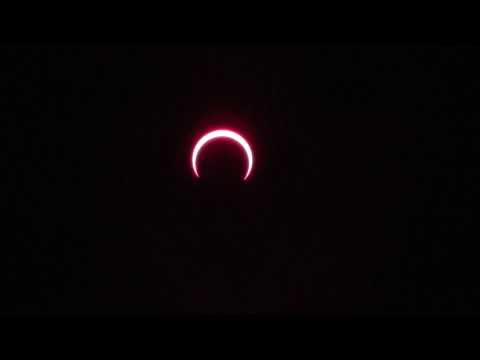
Sunday, September 7, 2014

"The Day Remains the Same"

I've been a lazy blogger again ... what's new?

I recorded "The Day" like a month ago and am finally now just putting it up. Corey wrote the music and I the lyrics. Arrangements have changed over the course of several bands and styles, including the iphone-in-the-garage style.

Enjoy.

Saturday, May 10, 2014

"Mouthful of Cavities" (Blind Melon)

This Blind Melon tune has been one of my favorites for years and years and years. Something about the timbre of it is just right for that ... poignantly melancholy state of mind. "Mouthful" is also fun to play. I enjoy its little walk-downs and especially the rhythm of the slide from C to D.

The problem is the late Shannon Hoon has a much higher voice than I do, and no matter what--nearly every one of Blind Melon's songs is just out of my singing register. Go up a little, down a little--hard to get my voice to sound right with their music, which is a bummer because their tunage is rather outstanding, I think. I love playing and listening but the song's just aren't easy for me to sing.

As for this recording, it sounds like my low E is a little high. I didn't notice it at the time. Alas. It's all for fun anyway.

Wednesday, May 7, 2014

"Fall Down" by Toad the Wet Sprocket

This next installation is another cover song -- and it's a request! I've been trying to alternate original material with cover material, but really--so much of my creative energy is devoted to writing that I have little left for music. And, I'm really terribly bored playing the old material, some which is recently old, some of which is ancient old, and so my drive to drop in originals is waning.

So, lyrics to "Fall Down" by Toad the Wet Sprocket, my second Toad cover. As far as I can tell it's like the vast majority of their other songs--not too complicated and rather catchy. Per my usual way I took some creative liberties with it but maintained what I think is still the meat of it. The ending I blame on the red I was drinking at the time. I didn't really see the volume coming, and then poof! it was there, and I went with it.

I think the Toad has a new album out or soon coming out? I'd be curious to see what they're up to after like ... 20 years.

Sunday, April 13, 2014

"Landslide" by Stevie Nicks / Dixie Chicks

Every so often my better half says, "Hey -- there's this song I want to sing." And then I say, "But my guitar only plays (played) one country song, and so ..." But since "Landslide" lyrics isn't originally a country song, it seemed like the right choice for this week's upload.

It's always a pleasure to do things with Jena -- work, play, you name it. And performing "Landslide" wasn't any different. She sings around the house more than I do, and now that such singing is on YouTube, it will last forever.

Sunday, April 6, 2014

"Issues with Time"


This weekend's tune is "Issues with Time." I don't recall the origins of the song at all. There is a lyric, however, that reminds me of an old college girlfriend, and "Issues" may or may not have anything to do with her. Hard to say. The lyric is "I've bent down crippled / trying to raise a sun..." and my girlfriend's last name was Sunner. So, there may be a connection; they're may not be.

Chord-wise, like too many of my originals, this one is probably unnecessarily complicated. I have no idea what the two chords are over the verse--probably some kind of B and A, but of a jazz nature. The rest isn't a secret although the timing might be. It usually is. If I recall, during the breakdown my old drummer used to play in 4, knowing the guitars were not in 4, and somehow when the music returned to the lyrics, we were all back where we needed to be. Polyrhythms, baby.


ISSUES WITH TIME


i’m lost—all in your eyes
they’re  such—sweet disguise
i’m lost—all in your mind
you see only color blind

when i look at you—something strange over my body
another body left behind
i turn around to find you—sitting on a park bench right there
with the cigarettes and wine

chorus
in time—i will see your eyes, see through your lies
in time—should I forget your name…
each time—that i forget your name…
in time—should I forget your name
each time—that i forget your name

i’ve bent down crippled—trying to raise a sun
she’s been a bloody yellow one
and she says—that she don’t want to shine
she would rather be left to dry

but i can’t carry her—i am but a man
i have no reality but what i see
and i can see the faces of people come and gone
every face has something gone

chorus

Tuesday, April 1, 2014

"Pray Your Gods" - Toad the Wet Sprocket

I've been a big fan of Toad the Wet Sprocket for years. They write good songs that are pretty easy to play, that have pleasing melodies and what not. And their lead singer has a nice voice and can really sing in the pocket.

As for "Pray Your Gods," I take a few creative liberties with it, but they're minor--really just to make the tune congeal for me as a one-man-and-a-guitar thing. (Plus, when you don't look up the tab and let your ear do the playing, there's bound to be some ... creative differences ...) My finger picking isn't the best, but I don't let that get in the way. Each time, whether my fingers are fat or not, I enjoy playing the song.

Sunday, March 23, 2014

"Craig's Song"

This week's tune was written by a good friend of mine, thus the eponymous title. I contributed the last verse, perhaps some other words here or there, but other than vocal/guitar styling, I can't really claim the song as my own although over the years it feels I've turned it that way.

The song is basically a mash of two two-chord songs with a little play on "Em" and "A" in between. It's got great energy, and I've always dug the words, especially the opening verse.

As for Craig, I'm not sure if he was a wise man playing a fool or a fool playing a wise man. It never really mattered. I knew with Craig that I could depend on what mattered most. And it remains that way. I thank him for the tune.

CRAIG'S SONG

Every dying eye in this room
has got a fix on me and is seeing through
their magazines and color books...
I don't know how long I can stand

Every time I take a few
I find I got a few more left to lose
and your stealing me with your eyes and greedy looks...
I don't know how long I can stand

Didn't anybody ever tell you
that good things--they never stay the same
didn't anybody ever tell you
the only constant thing is change

Every other time I look at you
I get the feeling that I'm getting through
but I don't even know if I care...
who are you kidding anyway

And every time I try to try
I see you hanging in my sky
and I want to make you just go away...
who am I kidding anyway

Didn't anybody ever tell you
that good things--they never stay the same
didn't anybody ever tell you
the only constant thing is change

Sunday, March 16, 2014

Zombie Apocalypse

"Zombie Apocalypse" has very little to do with zombies. Really it's about any paranoia, any myth of fear under which we attempt to umbrella our lives. I think there's no secret to the advent of zombies and end-of-times movies, books, tv shows in the last decade or so. Apparently there's also no lack of related songs.

The tune itself is new. It was conceived as a jam song, so it really would be best with electric, full-band, nice extended jam in the middle. But a single acoustic gets the idea across. Probably it's yet in draft form.

Lyrically I don't have much to say about it except I like the "they" in the song. It's so ambiguous. It's "them," you know? Them. And the they changes. They/them could be understood to change, anyway. When I jotted them down, I didn't think about it.

ZOMBIE APOCALYPSE

They say it's getting closer
It's feeling pretty scary
It's almost 'cross the river
It's feeling pretty heavy

C'mon, I think it's time we get on outta here
You know we've gotta get our shit together
We are supposed to meet them at the rendezvous
Yeah, yeah -- at the rendezous

Look at all these people
They're clogging up the highway
Don't look in the mirror
You're never going to make it

Images are closer than they appear
Everywhere I look they're closer closer closer
Do you think they'll ever make it to the rendezvous
Yeah, yeah -- the rendezvous

The truth is what you make it
We're always on our own
I've got a funny feeling
We're not in Kansas anymore

(rendition of the chorus)

Sunday, March 2, 2014

"Albatross"

This next installment is one for which I can't really take much credit. It was written by my buddy Corey (of RSR and Ellison Station fame) and his girlfriend Monica. She wrote the lyrics, and he came up with the chord progression to follow. I'd like to think I've put my stamp on it, however, by making a few modifications here and there, altering the style a bit, and by adding the title. Typically when Corey brought a song to the band, as the singer I was given creative liberties and with such inevitably flavored it to my own tastes. That was the MO in general, though. Somebody brings a song in, and then the rest of us go to work on it.

Originally "Albatross" was a bit minstrel-like, maybe akin to some of the pop trend we've seen in recent years by groups like Mumford and Sons. At least when Corey first brought it to the group, that's what I thought of. My tendency is a bit moodier than that, a bit more melodic. Corey had some cool riffs that went along with the progression too, but they felt forced, and I cut them. That's always tough to do, but attachments don't fly when you're trying to help something become what it wants to be. To my ear, "Albatross" just isn't a riffy song. It's a folk song of one nature or another.

As for lyrics, I thought they were awesome, and the changes I made really were to suit my singing/playing style more than anything else. A wonky rhyme or syntax maybe. Of the original version I especially liked Monica's leap in the first two lines of the second verse. I don't recall her exact, original wording, but I dig her move from being anchored down to "wounds deeper than the ocean." There's no narrative connection, but the lines are tied by language--anchor, ocean. It's cool.


ALBATROSS

10,000 years or more, she said—I've been lost of flying
Far above my wings are spread—higher and higher I climb
Hold me down, hold me down—I can't float anymore
I desire to be on solid ground—won't you hold me down

All this time I'm looking around—for someplace to anchor me down
I've got wounds that would not heal—deeper than the ocean
Hold me down, hold me down—I can't float anymore
I desire to be on solid ground—won't you hold me down

From the clouds to the forest floor—I need you to touch me down
In your arms I will fold my wings—and I'll be safe with you
Hold me down, hold me down—I can't float anymore
I desire to be on solid ground—won't you hold me down

Sunday, February 23, 2014

8:00

So this little nugget comes from a ways back. It's a simple 3-chord tune, really, with a little flavor added. The title "8:00" was given to it by a friend of mine--the drummer in my group at the time--Andrew Wilshusen. I was never very good at deciding on titles, and Andrew named most if not all of the songs for the band.

Other than that, I have little to say about it. The first line is a quote from William Faulkner. I'm not sure anyone knows for certain what he meant. I'm not certain what I meant. Unlike some of my originals, I don't think I've ever disliked this one. Others...

"8:00"

I drink for the pain. I've got bad blood in my vein and in my heart.
I smoke what I can. I've got yellow hands and a space between.

I need a little wound. Everybody needs food to stay alive.
I need a paper hole brought up from my soul, so I can write.

But Mary doesn't want to know it's true.
Every song I write belongs to someone new.
Fallin'...fallin' through.

She says I lie. I can go away and die.
Then her eyes look down. She begins to turn around and apologize.
I just play this song. It don't take too damn long, not to sing.

chorus

Monday, February 17, 2014

You know my name...

So, my first musical selection, "You Know My Name," comes from Chris Cornell of Soundgarden fame. And of his own fame in his own right. The tune was the theme to the last James Bond Film, Skyfall.

I've played a few Cornell/Soundgarden songs in the past. Often I don't care for his solo work quite as much. It's a bit too pop at times, even a little cheesy maybe (I'm thinking "Sunshower," for example). I'm more of a Badmotorfinger fan.

Anyway, my wife suggested my last band learn this, but we never got around to it. I think this iphone recorded version turned out just fine. The opening vocal is a bit flat, but you know--my guitar was probably out of tune anyway. As it is, I'm not trying to emulate Cornell (but you can find plenty of that garbage on YouTube). Just trying to play his cool song in my own way.

Saturday, February 15, 2014

And now for some music...

Wow. It's been over a year since my last post. It's not that I wouldn't prefer  a more literary life. I would. But until I finish the great American novel, I don't see that happening. And then I still don't see that happening.

So anyway, prioritizing means the blog gets shoved by the wayside most of the time. When I do have good ideas or when I run across poems I'd like to think about a bit in prose, I'm usually too tired too worry about it. But lately I've been asked by North American Review blog to blog a bit for them, which was a cool, thoughtful, and appreciated offer. And yesterday for Valentine's Day my wife gave me a cool leather-bound journal
and requested I fill it with haiku. I had taken up a similar project a few years ago when my mother gave me a small notebook made from (not with) recycled elephant poop. I called the collection "hai-poo" and returned it to her when every page was filled. That was actually a lot of fun, and I learned a bit about haiku along the way.

So with the NAR asking me to write a "The Art of Ecstasy" for their site and with my wife asking me to persistently keep a record of haiku, returning to the blog seemed a natural addition. But since I don't really care to invest the time to blather on about poetry, I think instead I'm going to periodically post some music. Some new, some old. Some covers, some originals. And of course I'll embed YouTube.

Now I do have some philosophical problems with this. I really hate most of the stuff on YouTube and much of what such a site entails. I mean honestly--most of what anyone needs to know about human existence can be gleaned from the annals of scatalogy past, present, and future. Very little needs to exist ad infinitum per the multitude of hard drives on which the internet survives. I do like all the education YouTube offers, but seriously--most of us having nothing to say or show. It's not true that everyone has a voice and that it should be heard. I don't exclude myself from this predicament.

But as a poet and a musician I am foremost an exhibitionist (aren't we all?). And so I find myself occasionally posting my foolishness online: YouTube, a blog, the infrequent and quotidian Facebook post (I fear how much energy is wasted in its various forms to house Facebook posts until eternity).

And with that being said, I intend to update "Present Everywhere" with regularity again, not with highfalutin pomp about poetry, but with semi-decent music, mine and otherwise.

Cheers.

Wednesday, October 10, 2012

"A Certain Slant of Light"

In case you missed it, my latest publication came out last week at Cheek Teeth, a site for flash fiction, literary thoughts, and artisan culture at large. As a poet it was cool to be solicited for fiction (thanks again, Katey Schultz). I couldn't help dropping poetry a line, however (thanks to you to, Emily Dickinson).

"A Certain Slant of Light" was inspired by this past summer's lunar eclipse, which I believe occurred in July. The fam and I were out on the sidewalk, diligently watching the swallowing occur on the inner wall of our box projector.

Here's the opening. Please find the rest at Cheekteeth. Drop a comment while your at it. Share.

Layla, with the warm sun at her back, focused on the small white circle inside her cardboard box projector. A perfect, dark bite had been taken from its upper-right corner. If the moon had progressed further through the eclipse in this last second, last minute, hour, such progress remained unremarkable.

“Lemmee see, lemmee see,” Maia chanted, tugging at the underside of the box. “Mom, lemmee see.”

Layla shifted the box over the head of her daughter. She tipped it until, on the distant end, an incomplete sun wavered on the white paper they had taped there.


Continue to read "A Certain Slant of Light" here.

Saturday, May 19, 2012

"Poetry, U.S.A." - My latest Feature at Cheek Teeth

Damon McLaughlin
Please drop by Cheek Teeth, the mouthpiece of Trachodon magazine, for my latest blog feature, "Poetry U.S.A":

Someone actually had the nerve to say to me once “Poetry comes from a place: if you want to write poetry, go there.” This “Poet” was well-written, respected, and (more significantly) responsible for my grade, so I drove halfway across the States and back looking for “Poetry,” searching for it in the deep canyons of Utah, sacrificing my Celica for it with a deer in the Sierras, reading the deer hair stuck in my Celica’s grill for signs of a new direction. I drank forties of Mickey’s malt liquor on Mission Beach, hoping for a vision. Considering the advice of the “Poet” was metaphorical, I searched inward via Buddhist mysticism, solitude, veganism—each method as fruitless as the last. But all the while I was searching, I was writing and reading poems like my life depended on it, just as it depends on sex and breathing.

...continue reading "Poetry U.S.A" at Cheek Teeth.

Saturday, May 5, 2012

Brilliance, Brick by Brick

In the latest issue of The Writer's Chronicle, while discussing with interviewer Heather Sappenfield the difficulty of recording her thoughts on the fly, Bonnie Jo Campbell comments, "Generally, though, I've trained my body and mind to bring me insights in the morning, when I'm sitting down and writing, seven days a week. Other people, poets especially, get brilliant ideas continually, and they write them into their lovely little Moleskines. Maybe that's the difference between poets and fiction writers. Maybe a lot of us fiction writers have our creative lives more regimented. Of course that's a gross generalization, and I disapprove of such a broad claim, even as I stand by it."

First and foremost, how wonderful to think of myself as receiving "brilliant ideas continually"—a truer statement there never was!

I say this in jest, of course. Certainly poets and fiction writers alike—arguably all people—receive brilliant ideas only to have them fall by the wayside. This occurs for folks while in the shower, perhaps, or on the treadmill, or while gazing longingly at the mountains while on their way to work at seven a.m. The mind is a terrible mishmash of thought, and for every million quotidian ideas passing through, there must be at least one cerebral stroke of brilliance. Maybe I'm an optimist. I don't know. As a poet, and per Ms. Campbell's comment, I'm probably biased.

Friday, April 27, 2012

Imaginary Toads, Real Gardens


Since I've been writing mostly prose for the last few months, it's a pleasure to have a few poems appear recently in the journals cant and The Potomac--the former a cool, slimline journal to which I was introduced last year and the latter a terrific web mag I’ve been reading for several year’s due to its keen sense of attitude. My poems in these journals' current issues (thanks again, editors!) are out of my Aphrodite's Son MS, which I hope to place here someday, pending the never ending series of revisions it undergoes--a process of intense scrutiny followed by weeks of looking away, looking away. I feel like wind slowly eroding a stone. Hopefully there’s something left when I’m all finished.

Be that as it may, it's been fun to be a prose writer for awhile, specifically a fiction writer, which is not my natural inclination. The thing about a story is that one typically has to pay attention to a certain physical reality in order to write it. That is to say, one must create through the legerdemain of language the illusion of a physical reality--you know, setting and stuff. Plot takes time, and time requires that things (characters) move through a physical space. So right there you've got the rudiments of fiction: plot, setting, character. A story isn't often as simple as that, but generally speaking each of these pieces has a role to play. It's sort of like building a house: the studs and insulation aren't what it's all about, but they are nevertheless important for holding the thing together with any kind of efficiency.

In a poem, however, at least as I write one, such components have very little to do with anything. While a story requires that aforementioned physical reality, a poem does not--much too lofty for such pedestrian items. It really could care less about time and space and the laws of physics. Those laws are irrelevant in poetry. Poems are spaceless, timeless aliens that place reality forcibly in the realm of the imagination. As Marianne Moore famously put it, they drop real toads into imaginary gardens. It is this contradictory, paradoxical nature that can make a good poem click--assuming, that is, the reader is willing to leap into such a vacuum.

Fiction seems to me to work in the opposite manner, placing imaginary toads in very real gardens. This is the trick that allows readers to identify with fictional characters (imaginary toads) and to imagine themselves in whatever environments through which the action moves, be it NYC or the Starship Enterprise, which flies according to the laws of physics, not the imagination. That sense of grounding is important. Not only does it allow readers to invest in characters, it allows characters to do unbelievable things readers notwithstandingly will find believeable via their suspension of disbelief. It's quite a remarkable achievement when you think about it.

On the other hand, because poetry's setting is the imagination, readers are left to connect the pieces on their own. Real toads, yes. We all know what a toad is, how it feels, how it's shaped, the fact it's likely to pee in your palm if you pick it up. But where to put the thing? It's your imagination, after all, as well as the poet's. The poet just gives you some odds and ends bought at a garage sale and asks that you, the reader, ultimately organize the poetic diorama.

I don’t really know where this is going save to say it’s nice to be thinking poetry in these times of fiction. Check out the above journals—they are, regardless of my work's inclusion in them, worth the read.

Sunday, March 25, 2012

A.E. Stallings' "Epic Simile"

AchillesIt’s been months since I last blogged about a poem, save for an article at Cheekteeth and a few tidbits here-and-there right here at Present Everywhere. Been busy.... But, between projects, I happily return with a bit about A.E. Stallings’ “Epic Simile,” which appeared in the January 2012 issue of Poetry magazine. Stallings is one of our foremost contemporary poets and without question one of our stellar formal—er, ah—ists. Recently she won a MacArthur fellowship due to said stellarness.

“Epic Simile” is a 22 line, largely narrative piece whose overt subject is the classical hero--someone akin to Achilles or to Russell Crowe’s Maximus in Gladiator comes to mind. The story is straightforward: our hero has been battling it out all day and, out of exhaustion perhaps, he spaces out, momentarily escaping into the outer and inner distances where he observes his death in the image of a deer. Upon the deer’s exit, our hero is suddenly back in scene, returned from that out-of-body, lyrical moment into his story.

From beginning to end, Stallings’ battle imagery is pretty clear. I like it best in the middle of the poem when she writes “of the wind / Brushing through stands of spears like conifers” (10-11). Seems the obvious image would be the other way around—conifers like spears—and I appreciate this reversal right down to its very mix-up of “stands of spears” instead of stands of conifers (I’d be curious to know how that image was originally drafted, if “stands of spears” was the first to come). Similar uses of battle imagery appear lines later when the deer’s “gaze / Beads on him like a sniper’s sites” and at the end in which blood isn’t clouding the hero’s eyes but such is “streaming into your eyes” (17-18, 22). Such use of imagery keeps this poem all of a concise piece—thus, the narrative in its little box—while simultaneously layering it, thereby asking readers to view the hero’s battle in a series of planes: the literal field, that of the deer/dream that Stallings refers to as “A blankness [that] swoons upon him,” and that of the present, of the reader’s present, whenever and wherever she may be (9).

Stallings’ diction is nice, too, for its visuals and acoustics. Consider the first line of “Epic Simile”: “Right shoulder aching with day-long butchery”. How can you go wrong with that? It’s precise and provocative, and I love the visual and aural play of the sh in shoulder with the ch in aching and butchery. I like ending the line with “butchery” for that matter. The image it provokes isn’t pleasant, but I love how the word falls out of my mouth: butchery. Yeah. The abundance of stresses in this line, falling in nature, adds to the punch of that last word. The second line is equally gifted in that it parallels the nature of the first. Now it’s the “Left shoulder numb with dints clanged on the shield”; the syntax mirrors the opening rhythm right down to the spondee at “dints clanged.”

Of particular interest to me are the gestures "Epic Simile" makes to poetry and to form. Sure, there’s that stereotype that poets write poems about poems for other poets to read, but I think that notion fits here, as evidenced immediately by the title. Much of the piece, right down to the warrior’s daydreaming, parallels the writing process and the trials and tribulations one undergoes when working with form and formlessness.

So, the hero battles his enemy; the poet battles the poem. Grrrr! Clash! Clang! Crackle goes the paper wadded and tossed into the trash as the fierce, persistent poet begins anew. It’s all kind of over the top and silly when considered so literally like this. I don’t think any among us really feels like a hero after all, at least not admittedly. And I think it a stretch to make such a direct comparison throughout such that the “hero’s death, / The prize, elusive quarry of his life” is like this POEM the poet is trying to accomplish, some grandiose, epic poem-of-all-poems, she writes toward all her life (13-14). But who knows? There is something to be said about the artist and the restless seeking of some truth or who-knows-what as pursued through the war one wages with his or her art. There is an “elusive quarry” out there, and art is one indicative way by which humans seek it.

“Epic Simile” instigates such meditations as this. For me, it speaks specifically to battles with poetic form, formal poetry, and the conversations poems/poets have with the poetic tradition. It’s hard not to think of epic anything, for example, without thinking of Homer. That first word of Stallings' title sets the alleged magnitude of the poem itself, evokes The Iliad, and nods to tradition pre- and post-Homer all in a single swoop.

Another nod toward tradition is the poem's blank verse. The third line is Stallings' first solid go at iambic pentameter: “The hero is fouled with blood, his own and others’ ”. It’s not perfectly metrical, and it need not be. In fact, I’d argue half the lines or fewer are written particularly strictly in verse, but that’s nevertheless enough for me to consider the poem as such overall, some of it definitely so, the ghost of blank verse ultimately present everywhere. I read blood here, too, as in—“his own and others’ ”—as a subtler nod to the past—and the present, for that matter. Contemporary poets write in the here and now, but every word we employ is steeped in history, poetic or otherwise. If the poet is a traditionalist or an experimentalist—so what? The conversation with history is no less quiet from either perspective.

An old complaint against traditional form is that form is dead, its possibilities expended. This is as old an idea as the epic is and a hindrance, quite frankly, to innovation; to the poet it’s “deadweight all around him,” as Stallings writes of her hero, as she writes of form itself. And it's true: form can kill you—but only the weakest among us. Any poet with a developed form-consciousness will tell you giving yourself over properly to convention—even by polarizing against it—is a liberating experience, not a retarding one. The sluggish, dead-weight of meter and rhyme can open windows to “glimpses [of] the mountains, the distant snow,” and it’s in these moments that the poet enters the zone, that blankness into which Stallings’ hero falls (8). It’s in this moment of release that the hero/poet hears, as though simultaneously aware and unaware: “A blankness swoons upon him, and he hears / Nothing but the white vowels of the wind” (9-10). Ahh, my favorite line of the poem-, what with its lovely Ws…”Nothing but the white vowels of the wind”… its v/f echoing, its th repetition, each one evocative of wind. Perhaps our hero/poet is hearing with his Zen-like third eye.

This moment, then, is the poem’s turn: the hero imaginatively wanders into the mountains, and the poet finally frees herself from the alleged confines of formal writing. In either case, a stepping-out-of-oneself occurs, a relinquishing of consciousness that takes hero, poet, and reader someplace other than the present. This the eureka moment: the poet officially gives herself over to the poem, and the self no longer exists. “What happens is a continual surrender of [the poet] as he is at the moment to something which is more valuable. The progress of an artist is a continual self-sacrifice, a continual extinction of personality," as Eliot claimed. This may be only for the moment, but it’s nevertheless Nirvana.

In the poem, this moment is short-lived. And with what does this leave our hero? Where does it leave him? Where the poet? In the arms of the reader—you—of course, who presently remains snapped into it, viewing the scene with “sweat or blood streaming into your eyes” (22). The story ends with you, with me, those of us who can only conjecture about the hero’s death and are left to do the same with the poem's. Like the hero who may or may not have come back to reality, whose future lies at the arms of his enemies, the poem lies at the mercy of its readers. As Kunitz observed, once the poem leaves the poet's desk, it’s yours. Something like that.

Tuesday, March 13, 2012

Mnemosyne Slumber Party Reading is up...


On February 23 I had the pleasure of reading at the Mnemosyne Slumber Party at the Mechanics Institute Library in San Francisco via Skype -- a cool experience with a great crowd. And the event is up now on Youtube. Mnemosyne is a relatively new mag focused on "Art, science and literature about dreams, memory and mind." Since I've been prosing it along lately, it was good to be back in the poetry saddle again. Thanks again, Andy.

So, my reading of "This City in Which I Drown" in SF from the comforts of my living room. All went well except for when the lights were dimmed. For a second I thought the connection dropped -- could no longer see the crowd. Alas!

Thursday, February 16, 2012

Mnemosyne Slumber Party Reading

MnemosyneWell, I may be missing out on AWP this year (as I have other years), but at least I'll be reading in San Francisco next week, 2/23, at the Mnemosyne Slumber Party event. Ahh, the wonders of Skype! I'll be reading work from my MS in waiting, Aphrodite's Son--looking forward to hearing the work of others involved with the mag.

Tuesday, January 24, 2012

A little Larry Levis

Been busy with other projects and have neglected the blog--alack! Have also been reading some Larry Levis and had to post this--the first three lines to his "Elegy With a Chimneysweep Falling Inside It":

Those twenty-six letters filling the blackboard
Compose the dark, compose
The illiterate summer sky & its stars as they appear